Friedman Etude 17

DestinyLSims
20 April 2026
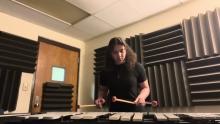
Working on Pedaling, Technique, and Dynamics
- Read more about Friedman Etude 17
- Log in or register to post comments

Working on Pedaling, Technique, and Dynamics

hello! I was looking through all of VW for Latin jazz posts and all I kept seeing the same style of posts over and over so I thought "hey, let me add some pizzazz in here for Hispanic Heritage Month!"
still don't know what I'm going to be doing but I'll be popping in from time to time to post something in here through the month of festivities.

I've done other etudes with Cherokee, but here's a new one. I like doing certain tunes even if I'm doing another something for that tune. Some tunes have so many progressions in them that when you learn them, you learn many many other tunes at the same time because they have pieces of these progressions. So learn this one again it's best. If you memorize it, play it and play it and play it study it study the harmony study the upper partial, see what you remember when you make up your own solo or you do your own comping.

Hello all,
The vibraphone is one of the only instruments we play where you have to work extra hard to control the ending of a note. It requires two separate strokes to play and end any given note with dampening, whereas on, say, the saxophone, you can end a note by simply stopping your air. Thus, it's important to figure out how all this relates to playing the instrument in any context, including in lines, so that you're able to play what you're hearing.
Hey everyone,
In this dampening lesson, I explain a technique I call "partial-deadstroking" and its implications for playing ballads, as well as comping on swing tunes!
Dreams make a difference.
Dreams Blog:
https://www.pipervibe.com/post/dreams
Supporting vibes players with Good Vibes
https://www.pipervibe.com/post/good-vibes-pipervibe-dot-com
Hey everyone,
Another lesson on comping on ballads! We're looking at rhythmic density and ways to create an overall sense of arc with your comping, or while you're playing solo. Let me know if you have any thoughts!
Hey everyone,
Here's the third and final part of my series on comping over a medium swing F blues, and how to give it that rhythmic drive a full rhythm section has. This is an interesting lesson, because I, myself, am still figuring it out! We're talking about sliding -- like a glissando, and how to use it the way guitarists and pianists do.
Let me know if you guys have thoughts on this! I obviously don't think it's applicable in all situations, but I think it certainly has some use in swing and rhythm music.
Hey everyone,
Another lesson on comping. This time I'm looking at octave displacement (a lot less crazy than it sounds in this context) and rolls -- two things vibes players could do more, I think!
Hey Everyone!
New series on comping. In the first few of these lessons, I'm just going to be talking about rhythm while comping and techniques to get a good feel. Obviously, metronome work, recording yourself and listening back, playing along to records, etc. will all help you get a good feel in the minutia of things, so make sure to practice all that, but here are some interesting, tangible techniques to add into your comping to give it some more swing on the macro-level.
Let me know if anyone has any thoughts!