Even Stevie Plays Giant Steps!

tonymiceli
16 March 2010
- Read more about Even Stevie Plays Giant Steps!
- 1 comment
- Log in or register to post comments


Look under 'Check This Out' for the link to the PDF of this lesson.
Joe Locke rockin' some Billy Joel and talking about choosing tunes.
Check out these cool Joe Locke Intros.
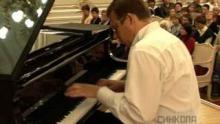
Go Paga!
Here's a Russian quartet performing a smoooking version of Paganini Caprice n°24 in St Petersburg. Man those guys can swiiinng!!
After a cool piano intro, you'll get around 1'45 to the heart of the tune with vibes on melody/solo. If I well remember we recently saw a performance of this vibist with 5 mallets!... Well I def. think he's more impressive with one 2!!
I hope "Paga" doesn't mind too much for this little 'variation' of style on his piece ;o)
Man I dig it! :o)
Enjoy!
- M
Here's Behn's chord melody of Bye Bye Blackbird. The videos are coming, but meanwhile practice his chord melody.
Again I left the chord symbols out, you can put them in. That's your homework assignment. :-)
This is a great lesson. Just go through all the tunes you know see where you can put this. Pull out the real book, whatever!
Also check out Behn's comping. He plays really clear rhythms IMHO.
I laughed when I heard vibraman mention Franz's name (Franz is a new subscriber). He said, 'Man I thought I knew all the great players in Germany'.
There's a message here I think worth mentioning. Man be humble. You just never know who's sitting in the audience, or who's around the corner from you.
I had Mike Gordon over the house today. I didn't know much at all about Phish. But man some people worship this group huh??? He shot some video for our hand drum site. Any fans? I'll also put some on face book.
I was supposed to go to the concert tonight, but i got sick.
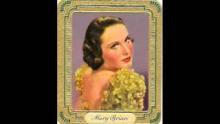
This is pretty amazing. Check out the chime solo in the middle. Man Rollini was a monster.