
Behn Gillece Talks About Solo Playing
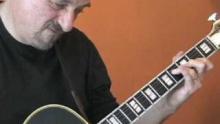
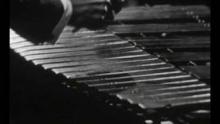
This is a great lesson by Behn Gillece on some approaches to solo playing as well as voicings.
- Read more about Behn Gillece Talks About Solo Playing
- 5 comments
- Log in or register to post comments

This is a great lesson by Behn Gillece on some approaches to solo playing as well as voicings.
I've seen players put the sticks in some pretty weird positions to acheive difficult voicings. But actually you really never have to stand in any sort of weird way to accomplishing difficult voicings on the vibes. Here's a little PDF to check out with some photos and the positions.
In order to learn a blues, you'll have to get some sort of system to help you remember the notes as well as to help transpose them into different keys. There are a few different types of blues scales, however in this podcast we'll focus on the minor blues scales. In the key of F the notes would be: F Ab Bb B C Eb F.
Here's quick lick number 1. Gives you a way to use the left hand to accompany yourself over a fast moving lick.
Check the end of the lick when you hit the F chord. Just double up with your right hand to play a chord. That's a good concept/technique to get in your playing.
Quick Lick #1
(I've added audio and video performances of Bluesette above)
Below is a lesson plan to help you study this tune. Post some recordings here. Remember, recording yourself is a great way to work on perfecting the lessons below. Don't underestimate the power of recording and posting your work here. It's crucial to your success.
Here are some ideas for the tune Bluesette and how to study it.
Beginners:
part 2
blackbird and bluesette
Here’s a technique I use called “hammers” – it’s a guitar embellishment technique that works nice on the vibe, giving a sort of note bending effect.
Early Gary Burton records such as “country roads” show him using this “sound”- that’s how I learned of it
It’s one of those “sounds” you use sparingly. The audio here is pretty lo-fi but you’ll get the idea
Part 1 shows the technique
Part 2 shows the technique used over Blackbird, and Bluesette
A tritone splits the octave in half. A very common sound are major triads between the tritone split. In other words, F maj and then B maj. This lesson talks about that relationship.
A quick video of a way to practice getting your Brazilian comping together.