Israel - TOTM

tonymiceli
9 March 2022
Great tune to study! It's a blues, but a little different minor blues.
- Read more about Israel - TOTM
- Log in or register to post comments

Great tune to study! It's a blues, but a little different minor blues.
Like usual, get the melody down. Know it well and play it well. Think about phrasing, rhythm and time!

This is very cool. It's amazing to see how people play mallet instruments. Their set ups and their use.

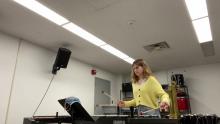
Demonstration of David Friedman Etude number 8 with a focus on mallet muting.


Hello everyone,
I've been trying to arrange more lately for my trio/other small groups. Here's my arrangement of Cedar Walton's "Bolivia." Hope you enjoy!

I've been playing the tune Israel. I really like it and discovered some cool things. So I thought I'd do a tune of the month on it!
So start learning it!
In a recent post, I was asked about how I would keep the drums out of the vibes mics. It's an age-old problem that nearly all of us have experienced.
Obviously, in a recording studio, the answer is to banish the drummer to a booth. Situation resolved. Any bleed beyond that can be removed with software in post production.
|
|

Randy just sent me this.
I can't imagine playing with this band, it sounds loud. But you can hear Billy!
I was just blown away looking at our Vbooks section. That is Virtual Books.
I was putting something in the chords section and I couldn't believe how many lessons were in there!
The thing about vibesWorkshop is you just look for stuff to practice. I don't think we necessarily need a sequence, we just need to learn and practice. Yes with a teacher it's more about sequence I guess, but here you can just look around.